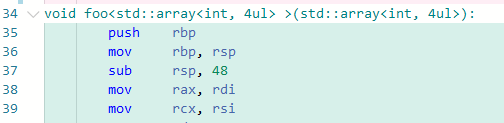
[uquote="azhel12",url="/forum/viewtopic.php?p=4309552#p4309552"][uquote="KorbenDallas",url="/forum/viewtopic.php?p=4309501#p4309501"]`std::array` - это не более чем struct-обертка для массива.[/uquote]Это не так.[/uquote]
Это
абсолютно так. Стандарт языка не утверждает этого открытым текстом, но открытые требования спецификации делают это фактически неизбежным (т.е. агрегат, structural-тип, списковая инициализация и т.п.) и традиционные реализации пользуются именно массивом внутри struct.
[uquote="azhel12",url="/forum/viewtopic.php?p=4309552#p4309552"]В
std::array размер - это шаблонный параметр, то есть каждая пара
<тип, размер> порождает новый тип данных.[/uquote]
Это прекрасно, но при чем здесь это? Да, это шаблон. Это именно шаблон для массива, завернутого в структуру. Параметры шаблона "тип" и "размер" становятся типом элементов этого массива и его размером. Где вы здесь увидели противоречие с тем, что я сказал выше?
Да и для обычного голого массива я могу сделать тип и размер шаблонными параметрами
Код: Выделить всё
template <typename T, std::size_t N> using naked_array_type = T [N];
Готово. Теперь `naked_array_type<double, 42>` - это синоним `double [42]`.
Так что шаблонность тут сбоку припеку. Она ничего не меняет.
[uquote="azhel12",url="/forum/viewtopic.php?p=4309552#p4309552"]И функция, которая собирается принимать
std::array становится шаблонной (то есть снова для каждой пары
<тип, размер> компилятор генерирует отдельную специализацию).[/uquote]
Что значит "становится шаблонной"? Нет, она не "становится шаблонной". Это вы ее можете сделать шаблонной, если захотите один раз написать код для разных типов и/или размеров. А можете и не делать этого. Это ваше решение.
[uquote="azhel12",url="/forum/viewtopic.php?p=4309552#p4309552"]Это вообще говоря сахар над обычными статическими массивами,[/uquote]
Совершенно верно. Как я сказал выше, это `std::array` - это синтаксический сахар над обычным массивом, завернутым в struct.
(Я также не понимаю такого использования термина "статический". Термин "статический" уже занят в С и С++ для других целей, т.е. для обозначения статического класса хранения. Поэтому откуда лезет вот эта странная манера называть обычные массивы "статическими" мне не ясно. Не ясно также, почему ораторы не понимаю проблемы с таим использованием уже занятого термина.)
[uquote="azhel12",url="/forum/viewtopic.php?p=4309552#p4309552"]можно и без
std::array обойтись:[/uquote]
Это само собой разумеется, но уже мимо темы. Я включился в обсуждение `std::array`именно как варианта
полноценного "массивного" типа, то есть
копируемого типа, который можно в том числе присваивать и передавать/возвращать
по значению. Именно об этом идет речь. Ваши шаблонные варианты с голыми массивами не делают массивы копируемыми и не позволяют передавать их по значению.
Классическим, старым как мир, С/С++ трюком для реализации копируемого массива является обертка голого массива в struct. `std::array` - это как раз С++ адаптация (под контейнерный интерфейс) этого самого трюка. Ни больше, ни меньше.


 ).
).